

Third-party reproduction
Purposes and Applications
Egg & Sperm Donation: This option is pursued by men/women who are unable to utilize their own sperm/eggs due to various factors such as:
- Absence or underdevelopment of ovaries.
- Premature ovarian failure or menopause.
- Risk of genetic disease transmission.
- Fertility challenges resulting from medical treatments like chemotherapy, surgery, or illness.
- Poor egg quality observed during multiple cycles of IVF treatment.
- Advanced maternal age and diminished ovarian reserve. In cases where the male partner experiences infertility (such as azoospermia or very low sperm count) or when there’s a risk of genetic disease transmission.
Surrogacy: Surrogacy involves a surrogate mother agreeing to carry and deliver a child for intended parents. It is sought by individuals unable to carry a pregnancy themselves due to reasons such as:
- Congenital absence or surgical removal of the uterus.
- Abnormal or undersized uterus.
- History of repeated implantation failure, miscarriages, or IVF failures.
- Conditions posing a risk to maternal health or life during pregnancy.
Gamete Donation: Understanding Egg Donation
Who Are Egg Donors?
- In good physical and reproductive health.
- Screened for infectious and genetic diseases.
- Evaluated for ovarian reserve and egg quality.
- Psychologically assessed, when appropriate.
- Approved according to national ART guidelines.
Evaluation of the Egg Donor
- Detailed medical and family history
- Physical and gynecological examination
- Blood group and hormone testing
- Ovarian reserve assessment
- Screening for HIV, Hepatitis B, Hepatitis C, and other infectious diseases
- Genetic screening when clinically indicated
- Ultrasound examination of the ovaries
- Psychological counseling, if required
Evaluation of the Recipient(s)
- Medical and reproductive history
- Pelvic ultrasound
- Assessment of uterine lining (endometrium)
- Hormonal evaluation
- Screening for infectious diseases
- General health assessment
- Counseling regarding the treatment process and expected outcomes
Preparation Process
Typically, egg donors, sperm donors, and surrogates are recruited through Assisted Reproductive Technology (ART) banks and agencies.
Semen samples undergo a quarantine period of six months in ART banks, during which they are screened for various infectious diseases such as HIV, HBsAg, VDRL, HCV, and cytomegalovirus. Depending on the clinical scenario, donor semen samples can be utilized for either artificial insemination (IUI) or In Vitro Fertilization (IVF).
Expectations
Results and Follow-up
Frequently Asked Questions
Who can benefit from egg donation?
Is egg donation legal in India?
Will the baby be genetically related to the mother?
Can I choose my egg donor?
What is the age limit for egg donation IVF?
Is egg donation safe?
How successful is IVF with donor eggs?
How long does the egg donation process take?
Our Doctor's

Emb. Pooja Agarwal
Chief Embryologist
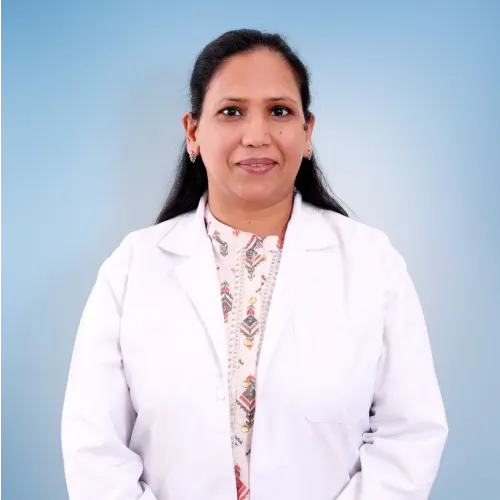
Dr. Mamta Chahar
IVF & Infertility Specialist

Dr. Akanksha Chauhan
IVF & Infertility Specialist