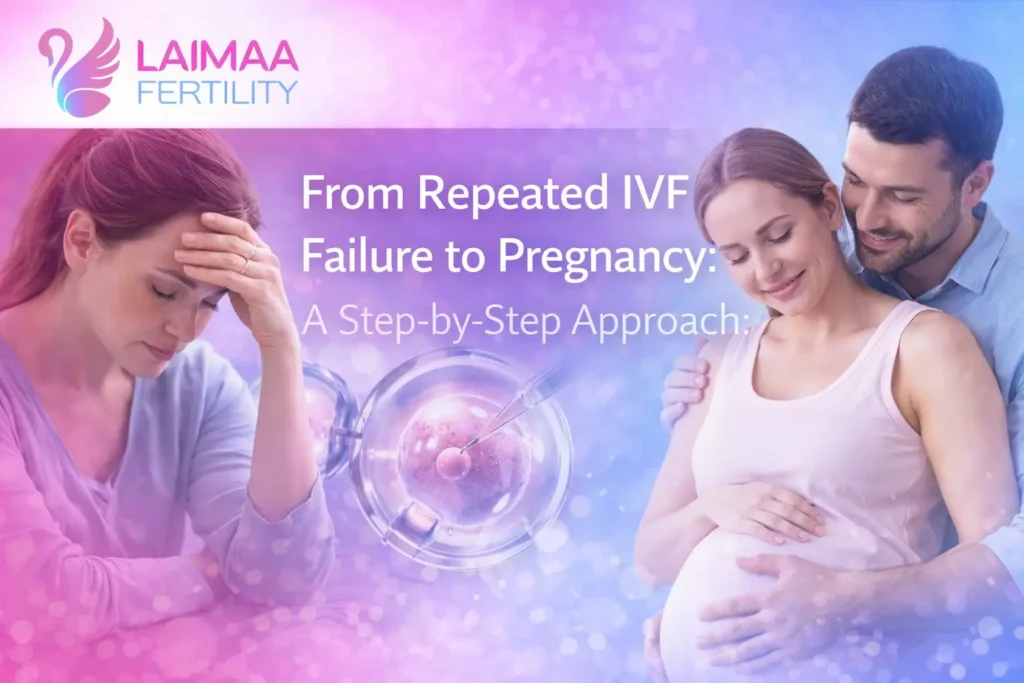
From Repeated IVF Failure to Pregnancy: A Step-by-Step Approach
The recurrent failure of IVF could be a very emotionally and physically demanding procedure for the couple wishing to form a family. To ensure that several IVF cycles turn out to be fruitless, there is a need to probe further into the underlying reasons. The cycle of learning about what might have been wrong and how the subsequent cycle can be more efficient is a graded process, step-by-step, which fertility specialists undergo. By a close check-up of the previous treatment periods, analysis of the quality of the embryos, and study of the well-being of the uterus, the doctor could optimize the treatment process to give the utmost probability of success. The experts in Laimaa Fertility focus on personalized evaluation and establish fertility solutions to help couples who have continued to have IVF failure fulfill a successful pregnancy. Understanding the Causes of Repeated IVF Failure Repeated IVF failure is an expression that is normally employed to refer to a scenario of failed pregnancy following several IVF procedures. Even though the use of IVF has been regarded as one of the most advanced fertility treatments, the success of the therapy depends on a significant number of biological and clinical aspects. In cases where implantation fails after several attempts, fertility experts keenly examine every phase of the IVF procedure to define possible problems. The quality of embryos is also one of the most common reasons why IVF fails to succeed. The embryos may be wrong due to chromosomal issues in the sperm or the egg. The older the mother is, the higher the chances of having an egg with a chromosomal abnormality, and this can reduce the possibilities of conception. Another issue is the Uterine health. The success of the embryo implantation requires the presence of a good environment in the uterus to develop. Conditions that can disrupt the implantation process are fibroids, polyps, scar tissue, or a thin endometrial lining, which result in the failure of in vitro fertilization cycles. The success of IVF can also be affected by hormonal imbalances. Reproductive hormones require proper concentrations to prepare the uterine wall and assist in early pregnancy. In case the level of hormones is not optimal, implantation can occur even in the case of healthy embryos being transferred. Moreover, metabolic conditions and immune conditions are occasionally contributory. Some immune reactions or medical disorders might interfere with the body’s capacity to promote implantation. At Laimaa Fertility, fertility specialists will thoroughly examine past cycle history, past and current medical data, and medical tests to gain a better idea of the probable causes of repeated IVF failure and structure a more focused treatment plan. Step-by-Step Approach to Achieve Pregnancy After Repeated IVF Failure Here are the steps to achieve pregnancy after repeated IVF failures: Step 1: Conduct a Comprehensive Fertility Re-Evaluation Repeated IVF failure is the first step in medical advice because the fertility profile of the couple needs to be re-examined. This will include a history of past IVF cycles, stimulation plans, fertilization, and embryo growth patterns. Physicians might also repeat or undertake other diagnostic procedures, such as hormonal analysis, ovarian reserve analysis, and uterine scanning. A thorough review is used to find out the factors that could have been missed or those that need additional research. In the future, fertility experts will be able to know what needs to be changed by closely examining the treatment results of the previous cycles to increase the likelihood of success in future cycles. Step 2: Evaluate Embryo Quality and Genetic Health The quality of embryos makes an important contribution to the success of IVF. Embryos should grow normally to implant and lead to a healthy pregnancy, even those fertilized successfully. The repeated IVF failures led the specialists to revise the embryo development to identify the possible case of genetic or developmental problems in the results. In certain instances, genetic testing of embryos may be done to establish the presence of abnormalities in the chromosomes. The procedure helps the doctors to select embryos with a high probability of implantation and successful development. This is done by evaluating the quality of embryos, which allows fertility teams to determine the best embryos to transfer. Step 3: Assess Uterine Health and Endometrial Receptivity The implantation should be accompanied by a healthy uterus. Pregnancy may not take place even if high-quality embryos are transferred in case the uterine environment is not the best. Doctors frequently carry out further tests of uterine health after several attempts at IVF failures. Such assessments can also incorporate imaging examinations or procedures to enable the specialists to look inside the uterine cavity with a closer look. The nature and the thickness of the endometrial lining are also investigated by physicians and are involved in facilitating implantation. The identification and adequate treatment of issues in the uterus, such as fibroids, polyps, or inflammation, could highly boost the chances of a successful implantation process in the later IVF processes. Step 4: Address Immune, Hormonal, or Metabolic Factors This is because health disorders may sometimes interfere with implantation or early pregnancy development. Due to this fact, immune responses, hormonal balance, and metabolic health can be regarded as the items of the investigation by the fertility specialists. The reproductive health can be influenced by such conditions as thyroid disorders, insulin resistance, or autoimmune reactions, which can alter the IVF outcomes. These disorders would be manageable under the care of appropriate medication, and it would become feasible to offer a more favorable environment at the time of implantation. By solving the potential barriers that contributed to the previous failures, doctors are able to prevent potential barriers that may have resulted in future failures. Step 5: Ensure Optimal Timing for Embryo Transfer Another aspect that is of vital importance towards a successful pregnancy is the timing of the transfer of the embryo. Instead, the embryo has to be implanted at the most receptive uterine lining. Even a healthy embryo may fail to implant if there is any disruption with the timing that
From Repeated IVF Failure to Pregnancy: A Step-by-Step Approach Read More »